Seahorse SVG Paper Cut Laser Cutting: Evaluating Digital Templates for Intricate Craft Projects
The intersection of traditional paper cutting arts and modern digital fabrication has created a robust ecosystem for hobbyists and professionals alike. Among the myriad designs available, the Seahorse SVG Paper Cut Laser Cutting template stands out as a compelling option for those seeking to blend organic forms with precise geometric execution. This specific design category is not merely a static image; it is a functional digital asset designed to bridge the gap between artistic vision and mechanical precision. For creators aged 20 to 50 who are navigating the complexities of material selection, machine compatibility, and design intricacy, understanding the nuances of this digital template is essential before committing to a project.
Understanding the Digital Asset and File Formats
At its core, a Seahorse SVG Paper Cut Laser Cutting project relies on a vector-based file structure. The term "SVG" (Scalable Vector Graphics) indicates that the design is composed of mathematical paths rather than pixels, allowing for infinite scaling without loss of quality. However, the value proposition of this specific item lies in its multi-format availability. Buyers typically receive a comprehensive package including SVG, PNG, DXF, and PDF files. This diversity is critical because different cutting machines and software environments have varying preferences.
The inclusion of a DXF file ensures compatibility with older or specialized CAD software often used in industrial laser cutting, while the PNG provides a raster preview for quick visualization. The PDF serves as a reliable fallback for users who may need to print a physical guide or use simpler slicing software. When evaluating these templates, it is important to recognize that the file format dictates how the design interacts with your hardware. A well-structured SVG file will contain clean lines and optimized node points, which reduces the processing time for your cutter and minimizes the risk of errors during the cutting phase.
Compatibility Across Cutting Machines
One of the primary advantages of using a standardized digital template like the Seahorse design is its broad compatibility. These files are engineered to work with most popular cutting machines, including but not limited to Cricut, Silhouette, and Glowforge systems. This universality means that whether you are using a desktop vinyl cutter for small-scale cardmaking or a CO2 laser for deeper material penetration, the underlying geometry remains consistent.
- Cricut/Silhouette Users: Will primarily utilize the SVG or DXF files, importing them into Design Space or Silhouette Studio respectively. The single-layer design simplifies the workflow, requiring only one pass through the machine.
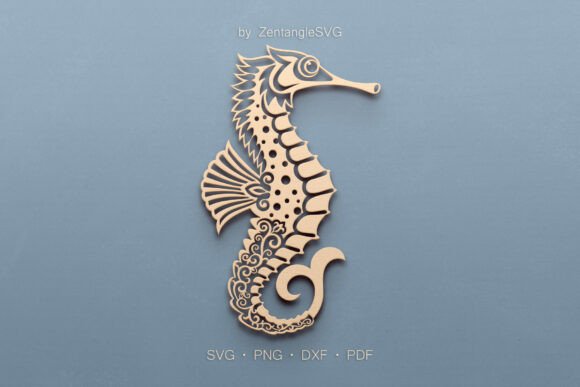
- Laser Engravers/Cutters: Can leverage the high-resolution vector data to cut through thicker materials like wood or acrylic. The precision of the laser allows for the intricate details of the seahorse’s tail and mane to be rendered sharply.
Analyzing Design Complexity and Material Versatility
The Seahorse motif is inherently complex. Unlike simple silhouettes, a detailed seahorse design requires careful attention to negative space and structural integrity. The prompt specifies an intricate detailed ornament, which suggests that the design includes fine lines, delicate curves, and potentially interlocking elements. This level of detail presents both an opportunity and a challenge.
Strengths: The intricate nature of the design allows for stunning visual effects, particularly when layered or backlit. The organic curves of the seahorse contrast beautifully with the rigid straight lines often associated with laser cutting, creating a unique aesthetic appeal.
Tradeoffs: High complexity increases the margin for error. Thin lines in the design may break if the material is too brittle or if the cutting pressure is set incorrectly. Furthermore, intricate designs require more time to cut, which can impact production efficiency for bulk orders. Creators must weigh the desire for detail against the practical limitations of their equipment and materials.
Material Selection and Application
A significant benefit of this digital template is its adaptability across a wide range of substrates. While originally conceived for paper and cardstock, the vector nature of the file allows it to be scaled and applied to harder materials such as wood, plywood, MDF, acrylic, plexiglass, and even thin metals.
- Paper/Cardstock: Ideal for greeting cards, scrapbooking, and wedding invitations. The random color variation mentioned in the product description adds a touch of uniqueness to each piece, preventing mass-produced uniformity.
- Wood/Plywood/MDF: Suitable for decorative wall art, ornaments, and shelving accents. Laser cutting wood with this design yields a warm, natural finish, though care must be taken to avoid charring on delicate internal details.
- Acrylic/Plexiglass: Offers a modern, translucent look. When cut from colored acrylic, the seahorse design can take on a vibrant, jewel-like appearance, making it suitable for contemporary home decor.
- Metal: Typically limited to thin sheets or foils via laser engraving or waterjet cutting. The intricate details may require higher resolution settings to maintain clarity.
Evaluating the Single-Layer Design Approach
The product specification notes that the design is a 1-layer design in random colors. This is a crucial distinction for buyers to understand. A single-layer design implies that the seahorse is a flat silhouette or a cut-out shape without built-in depth or shadowing effects. This simplicity offers several strategic advantages:
- Ease of Use: Users do not need to manage multiple layers or alignment issues. This makes it accessible for beginners who may find multi-layered projects daunting.
- Cost Efficiency: Fewer cuts mean less material waste and faster production times, which is beneficial for commercial sellers looking to maximize profit margins.
- Versatility: Because it is a single layer, the user has the freedom to add their own dimensionality. You can mount the single-layer seahorse onto a contrasting background, combine it with other elements, or use it as a stencil for painting.
However, this approach also has limitations. If you are looking for a ready-made 3D effect or a pre-assembled diorama, this template will not provide that out of the box. It requires additional creative effort from the maker to achieve depth, such as using foam tape for mounting or layering multiple copies in different shades.
Decision Factors: When to Choose This Template
Selecting the right digital asset depends heavily on your specific goals, skill level, and resources. The Seahorse SVG Paper Cut Laser Cutting template is an excellent choice for:
- Hobbyists exploring new techniques: If you are transitioning from basic shapes to more organic, complex forms, this design offers a manageable yet challenging project.
- Small business owners: The multi-format support and material versatility allow you to test different product lines (e.g., paper cards vs. wooden signs) without needing to purchase separate designs for each medium.
- Custom gift makers: The "random color" aspect adds a handmade feel that resonates with customers seeking personalized items.
Conversely, you might consider alternative options if:
- You require 3D depth: Look for templates specifically designed with multiple layers and offset coordinates to create dimensional art.
- You are working with very thick materials: Highly intricate single-layer designs may struggle with materials thicker than 3mm, as the laser or blade may not penetrate cleanly through all fine details.
- You need exact color matching: Since the design comes in random colors, it is not suitable for projects requiring strict brand color consistency unless you plan to paint or dye the material yourself.
Practical Considerations for Execution
To ensure success with the Seahorse SVG Paper Cut Laser Cutting template, proper preparation is key. Always perform a test cut on scrap material before proceeding with your final project. This step helps you determine the optimal speed, power, and frequency settings for your specific machine and material combination. Pay close attention to the orientation of the design; some intricate patterns may cut better when rotated 90 degrees to accommodate the direction of the laser beam or blade movement.
Additionally, consider the post-processing steps. For paper projects, removing small internal pieces (weeding) can be tedious but rewarding. Using tweezers and sharp scissors will help preserve the delicate details of the seahorse's tail and fins. For wood or acrylic, sanding or polishing the edges can significantly enhance the final presentation, turning a raw cutout into a polished decorative piece.
Conclusion on Suitability
The Seahorse SVG Paper Cut Laser Cutting template represents a versatile and accessible entry point into detailed digital crafting. Its strength lies in its adaptability across materials and machines, combined with a design that balances artistic intricacy with manufacturing practicality. By understanding the tradeoffs of a single-layer approach and leveraging the multi-format file support, creators can make informed decisions about how best to integrate this asset into their workflow. Whether used for personal enjoyment or commercial production, this template offers a solid foundation for creating beautiful, detailed seahorse-themed crafts.