The Intersection of Precision and Artistry: 3D Laser Cutting and Mandala Laser Cutting for Modern Creators
In the rapidly evolving landscape of digital fabrication, the ability to translate complex geometric patterns into tangible objects has become a cornerstone of modern design. Two technologies that have significantly lowered the barrier to entry for intricate craftsmanship are 3D Laser Cutting and Mandala Laser Cutting. While often discussed in separate contexts—one focusing on dimensional depth and structural complexity, the other on ornamental flatness and cultural aesthetics—they share a common foundation in precision engineering and vector-based design. For professionals, hobbyists, and educators alike, understanding how these methods intersect offers a pathway to creating high-value, unique products that stand out in both commercial and personal projects.
Understanding the Technology Behind the Cut
At its core, laser cutting utilizes a high-powered laser beam to melt, burn, or vaporize material along a programmed path. When we discuss 3D Laser Cutting, we are referring to techniques that allow for the creation of multi-layered structures. Unlike traditional flat cutting, which produces two-dimensional shapes, 3D laser cutting involves stacking layers, using relief carving, or manipulating the focal point of the laser to create depth, texture, and volume. This is particularly effective with materials like wood, acrylic, and foam board, where layering can simulate topographical maps, architectural models, or textured art pieces.
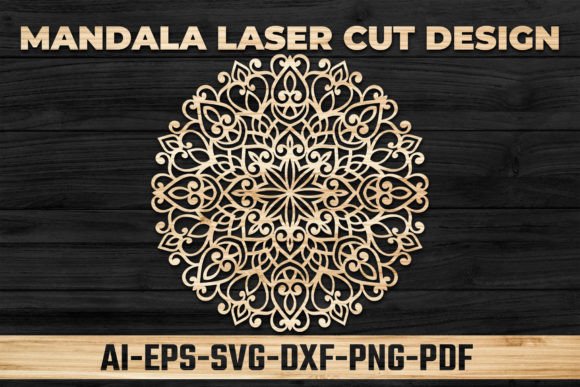
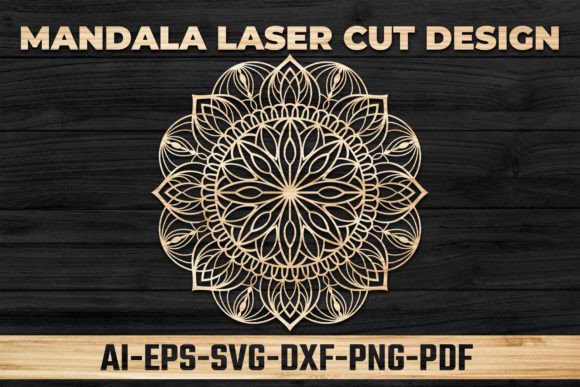
Conversely, Mandala Laser Cutting focuses on the intricate, symmetrical patterns characteristic of mandalas—circular designs that represent unity, balance, and complexity. These designs are typically executed in a single plane but require extreme precision due to the fine details involved. The "mandala" style is not just an aesthetic choice; it is a test of the machine’s capability to handle delicate cuts without damaging the surrounding material. Whether the goal is an arabesque pattern inspired by Islamic geometry or an ornamental floral motif, the success of the cut depends heavily on the quality of the source file and the calibration of the laser equipment.
The Critical Role of File Formats and Digital Preparation
One of the most significant advantages of modern laser cutting workflows is the flexibility of digital file formats. For creators looking to produce either 3D structures or intricate mandalas, having access to multiple file types ensures compatibility across different software ecosystems and hardware capabilities. A comprehensive design package should ideally include:
- DXF (AutoCAD): Essential for professional engineers and architects who need precise vector coordinates for CNC integration. DXF files provide the raw geometric data necessary for accurate plotting.
- SVG (Scalable Vector Graphics): The gold standard for web-based design and many consumer-grade laser cutters. SVGs are resolution-independent, meaning they can be scaled to any size without losing quality, which is crucial when resizing a small mandala detail for a large wall installation.
- PDF (Adobe Portable Document Format): Widely used for sharing final proofs and ensuring that fonts and vectors remain intact across different operating systems. PDFs are particularly useful for educational purposes, allowing students to view the design without needing specialized CAD software.
- EPS and AI (Adobe Illustrator/Encapsulated PostScript): These native Adobe formats preserve editing capabilities, allowing designers to tweak paths, adjust stroke weights, or modify colors before sending the job to the cutter. This is vital for iterative design processes.
- PNG (Portable Network Graphics): While primarily a raster format, PNGs with transparent backgrounds are increasingly used for quick previews or for engraving applications where tonal values matter more than vector paths.
When sourcing designs, such as those available in specialized marketplaces, receiving a complete suite of these formats allows the user to choose the best tool for their specific workflow. For instance, a hobbyist might prefer the ease of an SVG file for their Glowforge, while a university research lab might require the precision of a DXF file for their industrial CO2 laser.
Applications Across Diverse Sectors
The versatility of 3D Laser Cutting and Mandala Laser Cutting extends far beyond simple decoration. These techniques serve functional roles in various industries, demonstrating their real-world relevance.
Weddings and Event Design
Perhaps the most visible application of mandala laser cutting is in the wedding and event industry. Couples often seek unique backdrops, table centerpieces, or invitation embellishments that reflect their personal style. A laser-cut mandala backdrop can serve as a stunning photo booth background, casting intricate shadows under lighting. Because these designs are often made from high-quality materials like birch plywood or acrylic, they offer a premium look that mass-produced items cannot replicate. The symmetry of the mandala draws the eye inward, creating a sense of calm and focus, which aligns perfectly with the ceremonial nature of weddings.
Educational Tools and STEM Learning
Educators and researchers utilize 3D Laser Cutting to create tactile learning aids. Imagine a biology class studying cellular structures or a geography lesson exploring mountain ranges. By laser cutting layered models, teachers can provide students with hands-on representations of abstract concepts. Similarly, mandala patterns can be used in mathematics classes to teach geometry, symmetry, and rotational angles. The availability of ready-to-use templates in formats like PDF and SVG allows educators to quickly print or cut these resources without spending hours designing them from scratch.
Architectural Modeling and Prototyping
For architects and industrial designers, speed and accuracy are paramount. 3D Laser Cutting enables the rapid prototyping of building facades, interior partitions, and furniture components. The ability to cut complex curves and joints that would be difficult to achieve with manual tools makes laser cutting indispensable in the design phase. When combined with mandala-inspired decorative screens, architects can also address practical needs such as privacy and light diffusion, creating spaces that are both functional and aesthetically pleasing.
Material Considerations and Safety
While the technology is powerful, successful outcomes depend on selecting the right materials. For Mandala Laser Cutting, thin woods like basswood or balsa are ideal for fine details because they cut cleanly and do not char excessively. Acrylics, particularly cast acrylic, offer a glass-like finish that enhances the translucency of mandala designs when backlit. However, users must avoid PVC or vinyl materials, as they release chlorine gas when lasered, which is toxic and corrosive to the machine.
In 3D Laser Cutting, material thickness becomes a variable. Thicker materials may require multiple passes or higher power settings, which can affect edge quality. It is important to account for the "kerf"—the width of the material removed by the laser beam. In tight-fitting 3D assemblies, ignoring kerf can result in parts that do not fit together properly. Many advanced workflows include compensation adjustments in the design software to ensure perfect assembly.
Why Choose Specialized Design Packs?
For those new to laser cutting, starting with pre-designed packs offers several advantages. A curated selection, such as one offering 01 Designs with full format support (AI, SVG, PNG, PDF, DXF, EPS), provides a robust starting point. These packs are typically optimized for laser cutting, meaning the line weights, node densities, and color separations are already set up correctly. This saves time and reduces the likelihood of errors during the cutting process.
Furthermore, having a transparent background PNG allows for easy visualization of the design against different backdrops, aiding in presentation and client approval. The inclusion of AI and EPS files ensures that if a client wants a slight modification—such as adjusting the size of a central motif—the designer can make those changes easily without recreating the entire image. This level of flexibility is crucial in a service-oriented business model.
Conclusion
The convergence of 3D Laser Cutting and Mandala Laser Cutting represents a shift towards more accessible, precise, and artistic manufacturing. Whether you are a business owner looking to expand your product line with unique home decor, an educator seeking engaging visual aids, or a hobbyist eager to bring digital dreams to life, understanding these technologies and utilizing high-quality, multi-format design files is key to success. By leveraging the strengths of vector graphics and laser precision, creators can produce work that is not only visually stunning but also structurally sound and commercially viable. As the technology continues to advance, the possibilities for integrating these methods into broader creative and industrial workflows will only continue to grow.