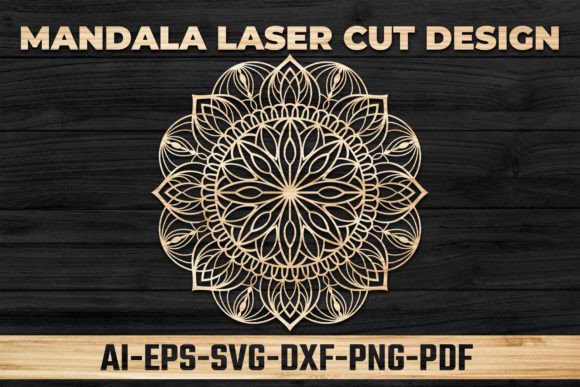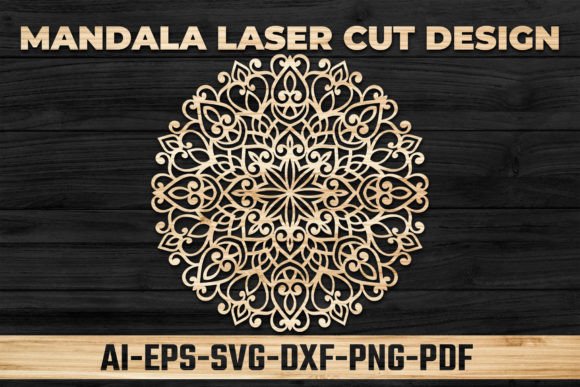
Mandala Laser Cutting SVG: Strategic Applications for Precision Design and Production
In the realm of digital fabrication and creative production, the distinction between a good design and a great one often lies in technical precision. For entrepreneurs, hobbyists, and professional designers alike, Mandala Laser Cutting SVG files represent more than just aesthetic patterns; they are foundational assets that bridge the gap between conceptual art and tangible reality. When you acquire designs from sources like 01Designs, you are not merely purchasing an image—you are acquiring a versatile toolkit capable of adapting to various manufacturing workflows.
The strategic value of utilizing high-quality vector formats cannot be overstated. Whether you are operating a small-batch e-commerce store or managing large-scale industrial production, the ability to manipulate intricate geometric patterns with mathematical accuracy is essential. This article explores how leveraging specific file formats—SVG, DXF, AI, EPS, PDF, and PNG—can optimize your workflow, reduce material waste, and elevate the final quality of your laser-cut projects.
The Technical Foundation: Why Vector Formats Matter
To understand the utility of Mandala Laser Cutting SVG files, one must first appreciate the underlying technology. Laser cutters rely on vector graphics, which define shapes using mathematical equations rather than pixel grids. This ensures that when a mandala pattern is scaled up or down, the edges remain crisp and the proportions remain exact. Raster images, such as standard JPEGs, lack this precision and can result in jagged edges or inconsistent cutting depths.
The inclusion of multiple format options in a single package, such as those provided by 01Designs, addresses the fragmentation of the software ecosystem. Different machines and operators prefer different environments. By providing DXF AutoCAD files alongside SVG Scalable Vector Graphics, these resources ensure compatibility across platforms ranging from industry-standard CAD software to user-friendly web-based editors.
- Scalability: Vector formats allow for infinite scaling without loss of quality, crucial for creating everything from delicate jewelry to large architectural models.
- Editability: Unlike static images, vectors allow for the modification of individual paths, enabling designers to customize mandala elements to fit specific branding or spatial constraints.
- Layer Management: Complex mandalas often require distinct layers for cutting, engraving, and scoring. Properly structured files facilitate this separation, streamlining the setup process.
Strategic Use Cases Across Industries
The application of Mandala Laser Cutting SVG extends far beyond decorative arts. A strategic approach to design integration can enhance operations in marketing, education, and product development.
Brand Identity and Physical Marketing Materials
For marketers and small business owners, physical touchpoints remain powerful tools for customer engagement. Custom mandala designs can be laser-cut into acrylic, wood, or metal to create premium packaging inserts, branded coasters, or unique point-of-sale displays. The use of Eps Adobe Illustrator and Ai Adobe Illustrator formats allows graphic designers to integrate these intricate patterns seamlessly into existing brand guidelines, ensuring color consistency and structural integrity before production begins.
When executed correctly, these items serve as memorable keepsakes that reinforce brand recall. The complexity of a mandala suggests craftsmanship and attention to detail, qualities that consumers associate with high-value products.
Education and Skill Development
In educational settings, Mandala Laser Cutting SVG files offer a practical introduction to geometry, symmetry, and digital fabrication. Educators and freelancers can use these designs to teach students about coordinate systems, path optimization, and material properties. The availability of PDF Adobe Portable Document formats allows for easy distribution of instructions and templates, while the vector nature of the files permits instructors to modify complexity levels based on student proficiency.
This hands-on approach transforms abstract mathematical concepts into tangible outcomes, fostering deeper learning and retention. Furthermore, it encourages iterative design thinking, where students learn to troubleshoot and refine their digital models before committing to physical materials.
Home Decor and Personalized Gifting
For hobbyists and creators, the demand for personalized home decor continues to rise. Mandala patterns are inherently versatile, fitting well within bohemian, modern, and minimalist aesthetics. By utilizing PNG files for quick prototyping or visual mockups, creators can preview how a design will look in a specific environment before investing in raw materials. Once finalized, the transition to SVG or DXF formats ensures that the final cut meets professional standards.
The ability to offer custom sizes and colors through digital customization tools gives small business owners a competitive edge. Customers appreciate the personalization aspect, which adds emotional value to the purchase.
Workflow Optimization and Decision Making
Adopting Mandala Laser Cutting SVG requires a thoughtful approach to workflow management. Randomly selecting a file format without considering the end goal can lead to inefficiencies and subpar results. Below are key considerations for optimizing your design-to-production pipeline.
Selecting the Right Format for the Job
Not all formats are created equal, and choosing the wrong one can introduce unnecessary steps. For instance, if you are working primarily in CorelDRAW or Inkscape, SVG is likely your most efficient choice due to its native support and ease of editing. However, if you are collaborating with engineers or using older CNC machines that rely on AutoCAD, DXF AutoCAD becomes the necessary standard.
Similarly, Eps Adobe Illustrator files are ideal for complex illustrations that require advanced color management and typography integration, though they may not always translate perfectly to laser cutter software without cleanup. Understanding these nuances allows you to select the most appropriate asset from your library, reducing conversion errors and saving time.
Pre-Flight Checks and Quality Assurance
Before sending any Mandala Laser Cutting SVG file to the machine, a rigorous pre-flight check is essential. This involves verifying that all paths are closed, there are no overlapping lines that could cause double-cutting, and that the scale matches the intended output dimensions. Using tools within Ai Adobe Illustrator or dedicated vector editors can help identify and resolve these issues proactively.
Additionally, consider the material thickness and laser power settings. Intricate mandala designs with fine details may require lower power settings to prevent burning or melting, especially in thinner materials. Planning these parameters in advance prevents costly mistakes and material waste.
Risks of Unintentional Usage
One of the primary risks associated with digital design assets is the lack of intentional application. Using a Mandala Laser Cutting SVG file simply because it looks appealing, without considering its structural limitations or market relevance, can lead to products that fail to resonate with customers or perform poorly in production. It is crucial to align design choices with strategic goals, whether that is enhancing brand perception, improving operational efficiency, or expanding product offerings.
Furthermore, relying solely on automated processes without human oversight can result in designs that ignore material grain or structural weaknesses. A thoughtful designer integrates technical constraints with creative vision, ensuring that the final product is both beautiful and functional.
Maximizing Value Through Versatility
The true power of the 01Designs feature lies in its versatility. By providing a variety of design formats, including SVG, DXF, AI, EPS, PDF, and PNG, users are empowered to adapt their workflows to changing needs. This flexibility supports long-term scalability, allowing businesses to grow without being locked into a single software ecosystem or hardware limitation.
For example, a startup might begin with PNG mockups for social media marketing, then move to SVG for initial small-batch production, and finally utilize DXF for mass manufacturing as demand increases. This phased approach minimizes risk and allows for data-driven decision-making at each stage of growth.
Moreover, the ability to edit and customize these designs fosters innovation. Users are not limited to static patterns; they can experiment with variations, combine elements from different mandalas, or integrate text and logos to create unique hybrid designs. This creative freedom drives differentiation in crowded markets.
Conclusion: Intentional Design for Better Outcomes
Incorporating Mandala Laser Cutting SVG into your production strategy offers significant benefits, from enhanced precision and scalability to improved workflow efficiency. However, realizing these advantages requires a deliberate approach. By understanding the strengths of each file format, conducting thorough pre-flight checks, and aligning design choices with clear business objectives, you can transform simple geometric patterns into high-value assets.
Whether you are an entrepreneur seeking to differentiate your brand, an educator inspiring the next generation of makers, or a hobbyist pursuing creative expression, the right tools make all the difference. Order your mandala laser cut today and experience the impact of thoughtful, technically sound design on your projects. The outcome is not just a beautifully cut piece of material, but a testament to strategic planning and execution.