Scorpion SVG Paper Cut Laser Cutting: A Digital Template for Precision Craft and Production
The intersection of digital design and physical fabrication has fundamentally altered how creators approach intricate projects. Among the most compelling assets in this space is the Scorpion SVG Paper Cut Laser Cutting template. This is not merely a decorative image; it is a functional, vector-based blueprint designed for precision execution across a wide array of materials. For professionals, hobbyists, and small business owners alike, understanding the nuances of this specific digital asset is crucial for achieving high-quality results in both paper crafts and industrial-style laser cutting applications.
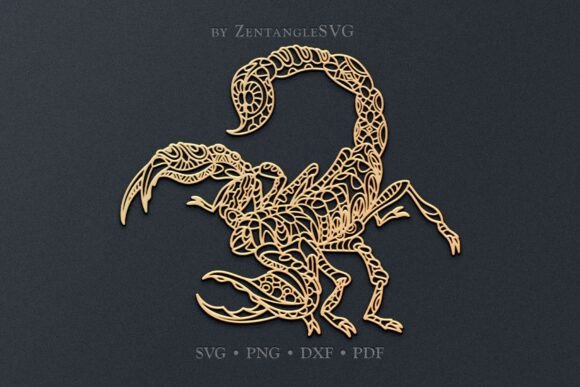
At its core, this product represents a transition from static imagery to actionable data. The "Scorpion" motif, characterized by its segmented body, articulated tail, and detailed pincers, offers a complex geometric challenge that tests the limits of cutting machines. When approached correctly, the result is a striking piece of art or functional object that demonstrates significant technical proficiency. This guide explores how to integrate this digital template into your workflow, ensuring compatibility, efficiency, and aesthetic excellence.
Understanding the Digital Asset Structure
Before initiating any cut, it is vital to comprehend the nature of the files provided. The listing includes Digital SVG, PNG, DXF, and PDF files. Each format serves a distinct purpose within the creative pipeline:
- SVG (Scalable Vector Graphics): This is the primary file type for most modern cutting software, including Silhouette Studio, Cricut Design Space, Adobe Illustrator, and Inkscape. SVGs are resolution-independent, meaning you can scale the scorpion design from a 2-inch coaster to a 4-foot wall panel without losing line quality.
- DXF (Drawing Exchange Format): Essential for users working with professional laser cutting software such as LightBurn, AutoCAD, or CorelDRAW. DXF files ensure precise coordinate mapping for fiber or CO2 lasers.
- PNG & PDF: These serve as fallback options or reference images. While PNGs are raster-based and pixelated upon zooming, they are useful for quick previews. PDFs can be imported into vector programs but may require tracing if layer separation is needed.
The inclusion of these varied formats ensures that the template is compatible with most popular cutting machines, bridging the gap between desktop craft enthusiasts and professional manufacturers. However, compatibility is only the first step; proper preparation determines the success of the final output.
Material Compatibility and Selection
The versatility of the Scorpion SVG lies in its adaptability to different substrates. The design’s intricate details—such as the fine lines of the exoskeleton and the overlapping segments of the tail—require materials that hold their shape and allow for clean cuts. Understanding material behavior is critical for avoiding project failure.
Paper and Cardstock
For traditional paper cutting arts, heavyweight cardstock (65lb to 110lb) is recommended. Standard printer paper is too thin and prone to tearing during the removal of small internal pieces. When working with paper, the random color aspect of the single-layer design becomes a feature rather than a limitation. By selecting contrasting colors for background layers or using textured cardstock, you can add depth to the flat design. The process involves careful weeding, where excess material is removed to reveal the scorpion’s form.
Wood, Plywood, and MDF
Laser cutting wood introduces a different set of considerations. Birch plywood is a favorite among makers due to its uniform density and lack of knots, which prevents inconsistent burning. Medium-Density Fiberboard (MDF) offers a smooth surface but generates more dust and requires higher air assist settings to prevent charring on deep cuts. The scorpion’s detailed ornamentation means that tight corners in the laser cutter must be managed carefully; while vector paths handle straight lines well, internal curves should be checked for minimum radius constraints to prevent melting or incomplete cuts.
Acrylic and Plexiglass
Acrylic provides a glossy, modern finish that enhances the visual impact of the scorpion design. Clear acrylic allows light to pass through, creating a stained-glass effect when backlit, while colored acrylics offer vibrant contrast. When cutting acrylic, focus and speed settings are paramount. Too much heat will melt the edges, creating a cloudy residue that obscures the intricate details. Proper ventilation is also required to manage the fumes produced during the cutting process.
Metal and Thin Sheets
While less common for standard hobbyist lasers, the DXF and SVG files can be adapted for use with fiber lasers or waterjet cutters on thin metals like brass or steel. In these scenarios, the file must be interpreted as a kerf-compensated path. The "single-layer" nature of the original design simplifies nesting, allowing for efficient material usage when producing multiple units for commercial purposes.
Workflow Integration and Preparation
Integrating the Scorpion SVG into a production workflow requires systematic planning. Rushing the setup phase often leads to misaligned cuts or wasted material. Follow these practical steps to ensure consistency and quality control.
Software Import and Verification
Upon importing the SVG or DXF file into your chosen software, verify the integrity of the vector paths. Zoom in closely on the tail segments and pincer joints. Are there overlapping lines? Are there closed shapes where open paths exist? Open paths in laser cutting can cause the machine to trace over the same line twice, resulting in burns or double-depth cuts. Use the " weld " or " union " tools to merge nodes and ensure all shapes are mathematically closed. This step is non-negotiable for maintaining the structural integrity of the delicate ornamentation.
Nesting and Layout Planning
Efficiency is key, especially when scaling up production. Analyze the bounding box of the scorpion design. If you are cutting multiple units from a single sheet of material, use nesting software or manual layout techniques to minimize waste. Consider the grain direction of wood or the texture direction of paper. Aligning the cuts parallel to the grain can reduce tear-out and improve edge quality. For paper crafts, consider whether the scorpion will be displayed flat or assembled into a 3D structure. If 3D assembly is the goal, leave tabs or slots intact in the design, or plan for manual gluing points.
Machine Calibration and Test Cuts
Never run a full batch without a test cut. Material thicknesses vary even within the same brand. Perform a power-speed gradient test on a scrap piece of your chosen material. Identify the settings that produce a clean cut through the entire thickness without excessive charring or smoke marks. Record these settings in a job log. Consistency across batches relies on repeatability. If you switch from birch to maple, or from 3mm acrylic to 5mm, recalibrate immediately. Do not assume previous settings will translate directly.
Post-Processing and Finishing
The cutting process is only half the battle. Post-processing elevates the raw cut piece into a finished product. For paper and cardstock, use tweezers to carefully remove small internal pieces, known as "weeding." Apply low-tack tape to lift stubborn fragments to avoid tearing the surrounding design. If the scorpion is intended for framing, consider mounting it on a contrasting backing board to enhance visibility.
For wooden or acrylic pieces, sanding may be necessary to smooth rough edges. For wood, start with a coarse grit and move to a fine grit to achieve a smooth finish before applying varnish or sealant. Acrylic can be polished with a flame polish technique or specialized polishing compounds to restore clarity at the cut edges. Metal pieces may require deburring to remove sharp edges left by the cutting process.
Strategic Applications and Market Opportunities
The Scorpion SVG Paper Cut Laser Cutting template is not limited to personal hobbies. It holds significant value in various professional contexts:
- E-commerce Products: Small business owners can produce custom home decor items, jewelry displays, or packaging inserts. The scorpion motif appeals to niche markets interested in astrology, biology, or edgy aesthetics.
- Educational Materials: Educators can use the design to teach geometry, symmetry, and engineering principles. Students can analyze the polygonal structures of the scorpion’s body, linking art with mathematics.
- Event Decor: Weddings, corporate events, and themed parties often require custom signage and decorations. The laser-cut scorpion can serve as a unique backdrop element, table number holder, or favor tag.
- Marketing Collateral: Brands targeting adventurous or resilient audiences might incorporate the scorpion into their logo applications or promotional merchandise, leveraging the symbol’s connotations of strength and adaptability.
By treating the digital template as a foundational asset rather than a disposable graphic, creators can unlock its full potential. The ability to scale, adapt, and produce consistently across materials makes the Scorpion SVG a valuable tool in the modern maker’s arsenal.
Conclusion on Implementation
Success with the Scorpion SVG Paper Cut Laser Cutting template hinges on respect for the process. From verifying vector paths to calibrating machines and executing careful post-processing, each step contributes to the final outcome. Whether you are producing a single gift for a friend or manufacturing inventory for an online store, adherence to best practices ensures that the intricate details of the design are preserved and highlighted. Embrace the technical aspects of digital fabrication, and let the precision of the laser bring the complexity of the scorpion to life.