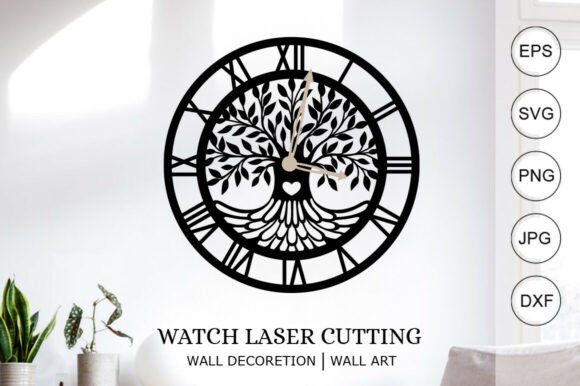
Transforming Timepieces: The Art and Utility of Watch Laser Cutting Designs
In the realm of modern craftsmanship, few intersections of technology and artistry are as captivating as watch laser cutting. What was once a purely mechanical discipline has evolved into a canvas for digital precision. Whether you are a hobbyist with a desktop CO2 machine or an industrial designer scaling up production, the availability of high-quality vector files has democratized access to intricate horological aesthetics. This article explores how these digital assets—available in DXF, SVG, JPG, PNG, and EPS formats—empower creators to produce stunning wall clocks, interior decor, and functional art.
The Digital Foundation: Why File Format Matters
Before a single beam of light touches wood, acrylic, or leather, the design must be translated into a language the laser cutter understands. This is where the versatility of file formats becomes critical. When sourcing a laser cut watch template, understanding the strengths of each format ensures your final product matches the designer’s vision.
- DXF (Drawing Exchange Format): This is the gold standard for many CNC and laser workflows. DXF files are widely compatible with software like AutoCAD, CorelDRAW, and LightBurn. They provide precise geometric data without the bloat of complex color profiles, making them ideal for clean, structural cuts.
- SVG (Scalable Vector Graphics): As an XML-based vector image format, SVG is perfect for web integration and editing in tools like Adobe Illustrator or Inkscape. Its scalability means you can resize a laser cut watch design from a small pocket-watch replica to a massive wall clock without losing any edge quality.
- EPS (Encapsulated PostScript): Often used in professional printing and graphic design, EPS files preserve vector paths while supporting embedded raster images. If your watch laser cutting project involves combining cut lines with engraved text or logos, EPS offers robust compatibility.
- JPG and PNG: While primarily raster formats, these are invaluable for reference. A high-resolution JPG allows you to visualize the final aesthetic before purchasing or downloading the vector source. For simpler projects, PNGs with transparent backgrounds can sometimes be traced back into vectors if the original DXF/SVG is unavailable, though this requires manual cleanup.
By ensuring your design suite supports all these elements, you remove barriers between imagination and execution. The transition from a digital screen to a physical object becomes seamless, allowing for rapid prototyping and iteration.
Beyond the Wrist: Repurposing Horological Aesthetics
The term "watch" often conjures images of wristwear, but in the context of laser cut watch designs, the scale changes dramatically. These templates are not limited to wearable items; they are architectural and decorative tools. The intricate gears, Roman numerals, and layered casings found in traditional watchmaking translate beautifully into larger formats.
Wall Clocks as Statement Pieces
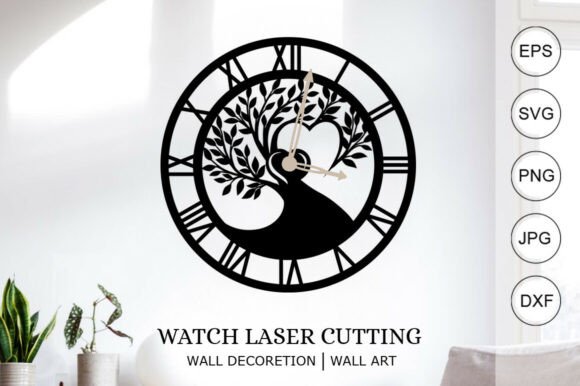
The most popular application of these templates is the creation of statement wall clocks. Unlike mass-produced timepieces, a laser cut watch wall clock offers a bespoke feel. By layering different materials—such as dark walnut for the base, brass-colored acrylic for gears, and white vinyl for numerals—you create depth and visual interest. The precision of the laser ensures that moving parts, if designed for functionality, mesh perfectly without friction.
Consider a minimalist Scandinavian-style living room. A large, monochromatic watch laser cutting piece in black acrylic mounted on a white wall serves not just as a timekeeper but as a focal point of geometric abstraction. It speaks to an appreciation for engineering and order, qualities inherent in both watchmaking and modern interior design.
Interior Design and Wall Art
Moving beyond functionality, these designs serve as sophisticated wall art. The interplay of light and shadow through the cut-out sections of a gear mechanism adds dynamic texture to a space. For commercial spaces like cafes, libraries, or corporate offices, custom laser cut watch installations can reinforce themes of punctuality, legacy, and innovation.
Furthermore, these pieces make exceptional gifts. A framed, non-functional laser cut watch model, perhaps stained in rich mahogany tones, sits elegantly on a desk or shelf. It represents a tangible connection to the history of mechanics, rendered in a contemporary style.
Material Considerations for Optimal Results
The success of your watch laser cutting project depends heavily on material selection. Different substrates interact with laser beams in unique ways, affecting both the cut quality and the final aesthetic.
- Wood and Plywood: Birch plywood is a favorite among makers due to its uniform layers and lack of voids. It takes stain well, allowing for multi-tonal effects. However, be mindful of the grain direction when engraving details like minute markers.
- Acrylic: Cast acrylic provides crystal-clear edges that polish themselves during the cutting process. Extruded acrylic, while cheaper, may leave a slight haze. Using colored acrylics allows for vibrant, translucent layers that glow when backlit—a feature particularly effective in laser cut watch designs.
- Leather and Felt: For a softer, tactile approach, leather offers a luxurious finish. Laser cutting leather produces sealed edges that prevent fraying, making it ideal for watch faces or decorative overlays. Felt can be used for sound-dampening backs or soft-textured contrast against hard woods.
- MDF (Medium-Density Fiberboard): Cost-effective and easy to paint, MDF is great for practice runs or large-scale installations. However, it produces more smoke and residue than other materials, requiring good ventilation.
When experimenting with materials, always perform test cuts. Variables such as laser power, speed, and air assist settings must be calibrated to the specific thickness and type of material to achieve the crisp edges required for intricate watch laser cutting patterns.
Integrating Technology and Tradition
The rise of laser cut watch templates highlights a broader trend: the fusion of digital fabrication with traditional craft. Historically, watchmaking required master artisans spending hundreds of hours assembling tiny components. Today, a maker with a laser cutter can reproduce the *aesthetic* of that complexity in minutes.
This does not diminish the value of traditional horology; rather, it expands the audience for it. By creating accessible versions of watch mechanics, we demystify the inner workings of timekeeping. Enthusiasts can see how the escapement interacts with the gear train, even if their version is static or simplified.
Moreover, this accessibility fosters creativity. Makers are not bound by the constraints of standard watch movements. They can exaggerate proportions, invent fictional gear ratios, or integrate cultural motifs into the dial design. The laser cut watch becomes a medium for personal expression, limited only by the imagination of the designer and the capabilities of the machine.
Practical Tips for Success
To ensure your projects stand out, consider these practical recommendations:
- Layer Management: Use color-coding in your design software to separate cut lines from engrave lines. This prevents accidental over-cutting and ensures that delicate details are preserved.
- Kerf Compensation: Remember that the laser removes material as it cuts. For tight-fitting joints, account for kerf width to ensure pieces fit together snugly without forcing.
- Finishing Touches: Sanding edges after cutting can smooth out rough spots, especially in wood. Applying a clear coat or wax enhances the natural beauty of the material and protects the surface.
- Assembly Strategy: Plan how your pieces will assemble. Will you use glue, pins, or friction fits? For complex laser cut watch models, pre-drilling holes for assembly pins can save time and improve alignment.
Ultimately, the appeal of watch laser cutting lies in its blend of technical precision and artistic freedom. By leveraging high-quality vector files and understanding the nuances of materials and machinery, creators can produce works that honor the past while embracing the possibilities of the future. Whether crafting a functional timepiece or a decorative homage to engineering, the results are consistently striking and deeply satisfying.